


Manaslu Circuit Trek: Route, Itinerary, Cost, Permits n Larkya La Pass
2026-09-08 16:47 PMManaslu Circuit Trek: Route, Itinerary, Cost, Permits & Larkya La Pass
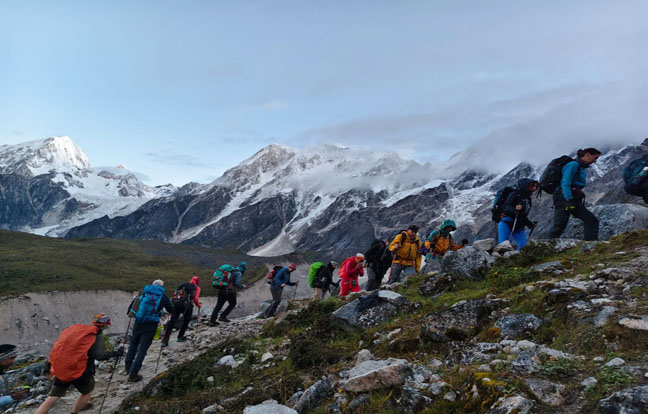
Tucked away in the west-central hills of Nepal, far from the crowded trails of Everest and Annapurna, lies one of the most rewarding trekking experiences in the entire Himalaya. The Manaslu Circuit Trek circles the eighth-highest mountain on Earth, Mount Manaslu (8,163 m), through a landscape that shifts from terraced rice paddies and subtropical forest to high alpine desert and glacier-carved passes. It is a trek that rewards patience, offers genuine cultural immersion in Gurung and Tibetan-influenced villages, and culminates in the crossing of the dramatic Larkya La Pass at 5,160 meters.
Unlike the Everest Base Camp or Annapurna Circuit routes, Manaslu has remained a "restricted area" trek, which means it requires special permits and, in most cases, a licensed guide. This single fact has kept the trail beautifully uncrowded, the teahouses simple and authentic, and the sense of adventure intact. If you are searching for a trek that combines serious mountain scenery with a feeling of genuine discovery, this guide will walk you through everything you need: the route, a day-by-day itinerary, permit requirements, realistic costs, difficulty and altitude considerations, and practical advice gathered from the reality of walking this trail.
Why Trek the Manaslu Circuit
Before diving into logistics, it's worth understanding what makes this trek special, because that context shapes every decision you'll make while planning it.
Manaslu, meaning "Mountain of the Spirit" (derived from the Sanskrit word "manasa," meaning intellect or soul), dominates the skyline for much of the trek. The mountain was first summited in 1956 by a Japanese expedition, and it still carries a quieter, less commercialized reputation than its 8,000-meter neighbors. Trekking around it, rather than to its base camp alone, gives you a full 360-degree relationship with the massif and the surrounding peaks, including Himlung Himal, Cheo Himal, Naike Peak, and views toward Annapurna II from the pass.
The cultural dimension is equally compelling. The lower trail passes through Gurung villages where Hinduism and Buddhism blend, while the upper Nubri and Tsum regions are inhabited by ethnic Tibetans whose customs, monasteries, and daily rhythms have changed little over centuries. Mani walls, chortens, and prayer flags accumulate as you climb, and by the time you reach Samagaon and Samdo, you are walking through a landscape that feels closer to Tibet than to the Kathmandu Valley.
Because the region only opened to foreign trekkers in 1991 and still requires restricted-area permits, teahouse numbers are limited and infrastructure is simpler than on Nepal's more famous circuits. That simplicity is part of the appeal: fewer trekkers, more authentic interactions, and trails that still feel wild.
Overview: Distance, Duration, and Difficulty
The Manaslu Circuit Trek typically covers roughly 150 to 180 kilometers, depending on your starting and ending points and any side trips you add. Most itineraries run between 14 and 18 days total, including travel to and from Kathmandu, with 12 to 14 days actually spent walking.
This is a moderately strenuous to challenging trek. It is not technical in the sense of requiring ropes or climbing gear, but the combination of long walking days, a high pass crossing above 5,000 meters, and the cumulative effects of altitude make it considerably harder than a standard lower-altitude trek. Trekkers should be in good cardiovascular condition and ideally have some prior high-altitude trekking experience, though determined first-timers with proper acclimatization and a sensible pace regularly complete it successfully.
The trail follows the Budhi Gandaki River valley northward, climbs steadily through forested hillsides into high desert terrain reminiscent of Tibet, then crosses the Larkya La Pass before descending into the Marsyangdi valley, where it joins the tail end of the classic Annapurna Circuit route near Dharapani or Besisahar.
Best Time to Trek Manaslu Circuit
Timing your trek correctly has an outsized impact on your experience, since weather at these altitudes can make or break both the views and the safety of the pass crossing.
Autumn (late September to November) is widely considered the best season. Skies are typically clear following the monsoon, temperatures are moderate, and visibility of the peaks is at its best. This is also the busiest period on the trail, though "busy" on Manaslu still means a fraction of the trekkers you'd encounter on Everest or Annapurna routes.
Spring (March to May) is the second-best window. Rhododendron forests bloom spectacularly in the lower and middle sections, days are pleasantly warm at lower elevations, and the pass is generally passable, though late-season snow can occasionally cause delays. Spring also tends to bring slightly hazier long-distance views than autumn due to increasing atmospheric moisture as the season progresses.
Winter (December to February) is possible but considerably more difficult. The Larkya La Pass frequently becomes snowbound and may be impassable without specialized winter trekking experience, proper gear, and sometimes a delay of several days waiting for conditions to improve. Lower sections of the trail remain trekkable and can be a quieter, colder alternative for those not attempting the full circuit.
Monsoon summer (June to September) is the least favorable period. Heavy rainfall causes landslides and leech-infested trails in the lower forested sections, river crossings become more hazardous, and cloud cover frequently obscures mountain views. Most trekking agencies discourage attempting the full circuit, and especially the pass crossing, during this window.
Manaslu Circuit Trek Route and Itinerary
The classic Manaslu Circuit begins near Soti Khola or Machha Khola, reached by a long drive from Kathmandu, and ends either at Dharapani (where you can continue into the Annapurna region) or at Besisahar, where transport back to Kathmandu or Pokhara is easily arranged. Many trekkers extend their trip by adding the sacred Tsum Valley as a side journey, though that is treated as a separate optional itinerary here since it typically adds five to seven days.
Below is a realistic, commonly used 16-day itinerary, including buffer days for acclimatization.
Day 1: Kathmandu to Machha Khola (or Soti Khola)
The trek begins with a long overland journey, typically 7 to 9 hours by private jeep or local bus, from Kathmandu along winding mountain roads to the trailhead. The road itself passes through changing landscapes of terraced hillsides and river gorges, and while it can be bumpy, it sets the tone for the remoteness ahead. You'll overnight in a simple teahouse at around 900 meters elevation.
Day 2: Machha Khola to Jagat
The trail follows the Budhi Gandaki River, crossing several suspension bridges and passing through small Gurung settlements. Expect a walking day of roughly 6 to 7 hours through subtropical forest, with waterfalls and hot springs near Tatopani along the way. Jagat, a stone-paved village at about 1,340 meters, is where your permits are first checked.
Day 3: Jagat to Deng
Continuing north, the valley narrows and the trail alternates between riverside paths and stone stairways cut into cliffs. This is a moderately demanding day of around 6 hours, ending in Deng at roughly 1,860 meters, where Tibetan Buddhist cultural influence starts becoming visible in the architecture and prayer wheels.
Day 4: Deng to Namrung
The trail crosses back and forth over the river and climbs through pine and rhododendron forest. You'll pass through villages like Rana and Bihi Phedi before reaching Namrung, a compact village at about 2,630 meters known for its excellent mountain views and one of the better-stocked teahouses on the route. This day takes roughly 5 to 6 hours.
Day 5: Namrung to Lho
A shorter but scenic day, climbing steadily through forest that gradually opens up to reveal your first proper views of Manaslu itself. Lho, at approximately 3,180 meters, is home to a beautiful monastery and gompa with a stunning viewpoint over the mountain. Walking time is typically 3 to 4 hours, making this a good day to arrive early and explore the village.
Day 6: Lho to Samagaon
Continuing through juniper and birch forest with increasingly dramatic mountain backdrops, the trail reaches Samagaon at around 3,530 meters, one of the largest and most culturally rich villages on the route. This Tibetan-influenced settlement, with its stone houses, chortens, and views directly onto Manaslu's south face, is where most itineraries schedule the first acclimatization day. Walking time is around 5 hours.
Day 7: Acclimatization Day in Samagaon
Rather than resting completely, the best acclimatization strategy involves a day hike to a higher elevation followed by a return to sleep at the same altitude, the "climb high, sleep low" principle. Popular options include a hike to Manaslu Base Camp (around 4,800 meters) or to Birendra Lake, a glacial lake just above the village with striking views of the mountain reflected in turquoise water. This day is essential for safe acclimatization ahead of the pass.
Day 8: Samagaon to Samdo
A relatively short and gentle day, crossing a wooden bridge over the Budhi Gandaki and climbing through juniper scrub into a starker, higher landscape. Samdo, at about 3,860 meters, is the last significant village before the pass and sits close to the Tibetan border; historically it served as a trading post between Nepal and Tibet. Walking time is roughly 3 to 4 hours.
Day 9: Second Acclimatization Day / Rest at Samdo
Many itineraries build in a second acclimatization day here, either resting fully or taking a short day hike toward the Tibetan border or up nearby ridgelines for views. Given that the following days push toward the pass, this extra buffer significantly reduces altitude sickness risk.
Day 10: Samdo to Dharamsala (Larkya Phedi)
A short but high-altitude walking day to the last stop before the pass, often called Dharamsala or Larkya Phedi, sitting at approximately 4,460 meters. Accommodation here is basic, limited to one or two simple lodges, so expect a simpler, colder night. This is where trekkers make final preparations, both physically and mentally, for the pass crossing. Walking time is around 3 to 4 hours.
Day 11: Dharamsala to Bimthang via Larkya La Pass
This is the defining day of the entire trek. Trekkers typically start before dawn, often around 4:00 to 5:00 AM, to cross the Larkya La Pass at 5,160 meters while the wind is calm and the ground is still frozen underfoot. The climb to the pass takes several hours through a landscape of glaciers, moraine, and high-altitude silence, with expansive views stretching toward Himlung Himal, Cheo Himal, Kang Guru, and Annapurna II on a clear day. After reaching the prayer-flag-draped summit of the pass, a long and steep descent follows into the Marsyangdi valley, ending in the beautiful alpine meadow village of Bimthang at roughly 3,700 meters. This is a long day, often 8 to 9 hours of walking, and one of the most physically demanding of the entire trek.
Day 12: Bimthang to Tilije (or Gho)
The trail descends further through birch and rhododendron forest, with Manaslu now visible from a different, western angle. This day offers a welcome sense of relief after the pass, with warmer temperatures and greener surroundings the further you descend. Walking time is roughly 6 to 7 hours to reach Tilije at around 2,300 meters.
Day 13: Tilije to Dharapani
A shorter, more relaxed day continuing the descent to Dharapani, at approximately 1,860 meters, where the Manaslu Circuit trail joins the classic Annapurna Circuit route. From here, road access exists, and many trekkers choose to end their trek by vehicle rather than continuing on foot.
Day 14: Drive from Dharapani to Kathmandu (or Pokhara)
Most trekkers now exit by jeep, a long but scenic drive back through the Marsyangdi valley to Besisahar and onward to Kathmandu or Pokhara. This drive can take anywhere from 8 to 10 hours depending on road conditions, though flights from smaller regional airstrips are sometimes available as an alternative if you finish near Pokhara.
Buffer Days
It's wise to build one or two extra buffer days into your itinerary, either for weather delays, illness, or simply to enjoy an extra rest day in a scenic village like Samagaon. Given the remoteness of this trek and the seriousness of the pass crossing, flexibility is not a luxury but a genuine safety margin.
Extending the Trek: Tsum Valley Add-On
Many trekkers combine the Manaslu Circuit with a visit to the Tsum Valley, a remote, sacred hidden valley closed to outsiders until 2008. Branching off from Lokpa near the start of the main trail, the Tsum Valley route leads to ancient monasteries, including Mu Gompa and Rachen Gompa, and villages where Tibetan Buddhist traditions remain remarkably intact. Adding Tsum Valley typically extends your trip by 5 to 7 days and requires an additional restricted-area permit, but it offers an even deeper cultural experience for those with the time and interest.
Permits Required for Manaslu Circuit Trek
Because the Manaslu region is classified as a restricted area, the permit process is more involved than for open trekking regions like Annapurna or Everest. You will typically need the following:
Manaslu Restricted Area Permit (RAP): This is the core permit required for the restricted section of the trail, generally from Jagat to Sama Gaon and beyond, through to Dharapani. Pricing is seasonal and tiered by the number of days. As of recent seasons, rates were structured with a base fee for the first seven days and an additional daily rate beyond that, with prices in the autumn peak season (September to November) higher than in the off-season (December to August). Because rates are periodically revised by the Nepal government, always confirm current fees with your trekking agency or the Nepal Tourism Board before departure.
Manaslu Conservation Area Project (MCAP) Permit: Covers the lower and middle sections of the trek within the Manaslu Conservation Area, helping fund local conservation and community development efforts.
Annapurna Conservation Area Project (ACAP) Permit: Required because the trail exits into the Annapurna Conservation Area near Dharapani, even though you are not trekking the full Annapurna Circuit.
A Licensed Guide Requirement: Unlike fully independent regions, the restricted-area rules for Manaslu require trekkers to be accompanied by a licensed guide from a registered trekking agency, and groups must generally consist of at least two people (solo trekkers typically need to arrange for a second permit holder or join an existing group through an agency). This regulation exists partly for safety, given the remoteness of the trail and proximity to the Tibetan border, and partly to support local guiding livelihoods.
Because permit rules, group-size requirements, and fees are updated periodically by Nepali authorities, it is essential to book through a registered trekking agency in Kathmandu, who will handle the paperwork, the required guide, and the multiple permit checkpoints along the trail.
Cost of the Manaslu Circuit Trek
Budgeting for this trek involves several layers: permits, guide and porter fees, accommodation, food, transportation, and gear. Below is a realistic breakdown to help you plan.
Permits: Combined, the Restricted Area Permit, MCAP, and ACAP fees generally run into the low hundreds of US dollars per person for a standard two-week itinerary, with the exact figure depending on season and trip length. Autumn permits cost noticeably more than winter or summer permits.
Guide and Porter Fees: A licensed guide typically costs between 25 and 35 US dollars per day, while porters, who can carry your main pack so you only carry a daypack, generally cost between 20 and 25 US dollars per day. Many trekkers hire one porter for every two people to manage costs while still lightening their load.
Teahouse Accommodation: Along most of the route, basic teahouse lodging costs relatively little, often just a few dollars a night, especially if you eat your meals at the same teahouse, since many lodge owners offer free or discounted rooms in exchange for guests dining there. In more remote spots near the pass, such as Dharamsala, prices rise somewhat due to the difficulty of supplying these areas.
Food: Meals typically cost more the higher and more remote you go, since everything must be carried in by porters or mules. Expect to spend more per meal near Samdo and Dharamsala than in lower villages like Machha Khola or Jagat. A hearty dal bhat (rice, lentils, and vegetables, often with unlimited refills) remains the most filling and cost-effective option throughout the trek.
Transportation: The jeep or bus transfer from Kathmandu to the trailhead, and the return journey from Dharapani or Besisahar, forms a meaningful part of your budget. Private jeeps cost considerably more than shared local transport but save significant time and are more comfortable on the rough roads.
Gear and Miscellaneous: Depending on what you already own, budget for essential cold-weather gear, a good sleeping bag rated for sub-zero temperatures, trekking poles, and travel insurance that specifically covers high-altitude trekking up to at least 6,000 meters, since standard policies often exclude the elevations reached on this trek.
All-Inclusive Package Estimate: Many trekkers opt for an all-inclusive package through a Kathmandu-based agency covering permits, guide, porter, accommodation, meals, and transportation. Depending on group size, season, and the level of service, such packages generally range from moderate to premium pricing per person for a full 14 to 18 day itinerary, with solo travelers paying somewhat more per person than those in a group of four or more, since fixed costs like transport and guide fees are shared.
It's worth requesting an itemized quote from any agency you consider, so you understand exactly what is and isn't included, particularly regarding emergency evacuation coverage and what happens if bad weather delays your pass crossing.
Altitude and Health Considerations
The Larkya La Pass, at 5,160 meters, is the high point of the trek and the primary altitude concern. Altitude sickness, medically known as acute mountain sickness (AMS), can affect trekkers regardless of fitness level, and the risk increases with faster ascent rates and insufficient acclimatization.
The itinerary outlined above includes two dedicated acclimatization stops, at Samagaon and Samdo, which is considered essential rather than optional given how high the trek climbs before the pass crossing. Key practices to reduce risk include ascending gradually, staying well hydrated, avoiding alcohol at altitude, eating enough calories even when appetite decreases, and taking acclimatization days seriously rather than skipping them to save time.
Common symptoms of mild AMS include headache, nausea, fatigue, and disturbed sleep. These often resolve with rest and are managed by not ascending further until they subside. More serious symptoms, such as confusion, severe shortness of breath at rest, or loss of coordination, are signs of potentially life-threatening high-altitude pulmonary or cerebral edema, and require immediate descent and medical attention.
Because of the trek's remoteness, particularly near the pass where the nearest road access is days away in either direction, comprehensive travel insurance covering helicopter evacuation is not optional gear, it's a genuine safety requirement. Many trekkers carry a personal locator device or satellite communicator in addition to their guide's communication equipment, given the limited mobile network coverage in the upper valley.
What to Pack for the Manaslu Circuit
Packing for this trek means preparing for a wide range of conditions, from warm, humid lower valleys to freezing high-altitude mornings at the pass. A well-considered packing list typically includes:
Clothing: Layering is essential. Moisture-wicking base layers, an insulating mid layer such as a down or synthetic jacket, and a waterproof, windproof outer shell will cover most conditions. Warm trekking pants, a warm hat, sun hat, gloves (ideally both a lighter pair and a heavier insulated pair for the pass), and quality wool or synthetic hiking socks round out the essentials.
Footwear: Broken-in, waterproof hiking boots with good ankle support are critical, given the mixed terrain of stone stairways, forest trails, and the icy, uneven ground near the pass. Gaiters can help in early or late season snow.
Sleep System: A four-season sleeping bag rated to at least -15°C is strongly recommended, since teahouse rooms, especially near Samdo and Dharamsala, are unheated and can get bitterly cold at night.
Health and Safety: A basic first-aid kit, diarrhea and altitude sickness medication (in consultation with a travel doctor before departure), water purification tablets or a filter, and a headlamp with spare batteries for the pre-dawn pass crossing.
Other Essentials: Trekking poles (genuinely valuable on the steep pass descent), a good daypack, sunglasses with strong UV protection (snow glare near the pass is intense), sunscreen, a reusable water bottle or hydration bladder, and a power bank, since charging facilities become sparse and sometimes chargeable the higher you go.
Documents: Multiple passport photos for permits, your passport itself, travel insurance details, and printed or digital copies of your permits, which are checked at several checkpoints along the route.
Accommodation and Food Along the Trail
Teahouses along the Manaslu Circuit are simpler than those on more developed trails like Everest Base Camp or the Annapurna Circuit, particularly in the upper sections. Rooms are typically basic twin-share affairs with a bed, blanket, and little else, and shared bathroom facilities, sometimes squat-style, are the norm outside the larger villages. Hot showers, where available, are often an additional paid service, especially the higher you climb.
Food centers around Nepali and Tibetan staples. Dal bhat remains the trekker's best friend, offering a filling, often refillable combination of rice, lentil soup, vegetable curry, and pickle. Other common options include noodle soups, fried rice, momos (Tibetan dumplings), and simple pasta dishes, along with hot drinks like masala tea, ginger tea, and garlic soup, the latter locally believed to help with acclimatization. As you climb higher, menus shrink and prices rise, so it's wise to carry some backup snacks like energy bars or dried fruit for the higher, more limited-supply villages.
Tips for a Successful Manaslu Circuit Trek
Book through a registered agency well in advance, particularly if trekking during the autumn peak season, since permit processing and guide arrangements take time and cannot be done fully independently due to the restricted-area rules.
Don't rush your acclimatization days. It can be tempting to push ahead when you're feeling strong, but altitude sickness doesn't correlate neatly with fitness level, and the consequences of skipping acclimatization near a 5,160-meter pass are serious.
Start the pass crossing early. Weather at the Larkya La tends to deteriorate by early afternoon, with wind picking up and cloud building. An early start, well before sunrise, gives you the best chance of clear conditions and a safer descent before conditions worsen.
Carry cash in Nepali rupees. There are no ATMs beyond the lower trailhead towns, and card payments are not accepted in teahouses along the trail, so budget and withdraw enough cash in Kathmandu or Besisahar before you set out.
Respect local customs. Many villages, particularly in the upper Nubri region, are deeply Buddhist. Walk clockwise around mani walls and chortens, ask before photographing people or ceremonies, and dress modestly, especially near monasteries.
Consider trekking during the shoulder of the autumn season (early October or mid-to-late November) if you want good weather with fewer fellow trekkers than the September and October peak weeks.
Train beforehand. Even though guides and porters can assist, several consecutive days of 5 to 7 hour walking at altitude, followed by a demanding pass crossing, is genuinely taxing. Building cardiovascular fitness and doing some hill training in the months beforehand will make the experience considerably more enjoyable.
Manaslu Circuit vs. Other Nepal Treks
For those weighing this trek against Nepal's more famous routes, a few distinctions stand out. Compared to the Everest Base Camp trek, Manaslu offers a comparable sense of high-altitude drama and Himalayan culture but with a fraction of the trekker traffic and no flight-dependent trailhead, since you drive in and out rather than relying on the often weather-delayed flights to Lukla. Compared to the classic Annapurna Circuit, which has seen significant road development in recent years eroding some of its wilderness feel, Manaslu remains noticeably more remote and undeveloped, in part precisely because of the restricted-area permit system that limits numbers and requires guided travel. The trade-off is cost and flexibility: Manaslu requires more upfront planning, a mandatory guide, and generally a higher overall budget than fully independent, unrestricted routes.
Final Thoughts
The Manaslu Circuit Trek offers something increasingly rare in Nepal's most popular trekking regions: a genuine sense of remoteness paired with world-class Himalayan scenery. From the terraced lowlands along the Budhi Gandaki River to the stark, wind-scoured heights of the Larkya La Pass, this trek moves through an extraordinary range of landscapes and cultures in just two to three weeks. It demands proper preparation, respect for altitude, and a willingness to travel at the trail's own pace, but in return, it delivers days of walking beneath one of the world's great mountains, nights in villages where ancient Tibetan Buddhist traditions still shape daily life, and the profound satisfaction of crossing a genuinely high Himalayan pass under your own power.
For trekkers who have done the more established circuits and are looking for the next step, or for first-timers drawn to a trek that still feels like an expedition rather than a well-worn tourist trail, the Manaslu Circuit is very hard to beat. Plan carefully, choose a reputable local agency, respect the acclimatization schedule, and you'll come away with one of the most memorable trekking experiences the Himalaya has to offer.