
The history of the Annapurna region traces its roots to the early 20th century when intrepid explorers began venturing into the remote valleys of Nepal. Among them was Maurice Herzog, a French mountaineer who led the first successful ascent of an 8,000-meter peak, Annapurna I, in 1950. Herzog's expedition sparked global interest in the region's mountains and laid the groundwork for future exploration.
In the following decades, as Nepal opened its borders to tourists, the Annapurna region emerged as a premier destination for trekkers seeking adventure amidst towering peaks and pristine landscapes. The establishment of trekking trails and teahouse lodges along the route paved the way for a new era of tourism, transforming remote villages into bustling hubs of activity during the trekking season.
One of the highlights of the Annapurna Base Camp Trek is the opportunity to interact with the diverse ethnic communities that call the region home. From the hospitable Gurungs and Magars to the resilient Sherpas, trekkers are immersed in a melting pot of cultures, traditions, and rituals that have been preserved for generations.
As the popularity of the Annapurna Base Camp Trek grew, so did concerns about environmental degradation and the impact of tourism on the fragile ecosystem. In response, local communities, government agencies, and conservation organizations have joined forces to implement sustainable practices and initiatives aimed at preserving the region's natural beauty for future generations to enjoy.
Today, the Annapurna Base Camp Trek continues to attract adventurers from around the globe, drawn by its majestic vistas, challenging trails, and the promise of an unforgettable journey. Whether trekking solo or joining a guided tour, every step taken along the path is a testament to the enduring allure of the Himalayas and the indomitable human spirit.
Introduction to Annapurna Base Camp Trek
Welcome to our trekking office! Embark on the adventure of a lifetime with the Annapurna Base Camp (ABC) trek, a journey that takes you to the base of beautiful mountain, Mount Annapurna. This iconic trek is a dream for many adventurers and offers an unparalleled experience in the heart of the Himalayas.
The Annapurna Base Camp Trek stands as a testament to the allure of the Himalayas, drawing adventurers from across the globe to experience its grandeur. Spanning approximately 110 kilometers round trip, this iconic journey begins in the vibrant city of Pokhara, where trekkers set out on a quest to explore the hidden treasures of the Annapurna Sanctuary. From the lush foothills of the Himalayas to the rugged terrain of the high alpine region, every step of the trek offers a glimpse into the natural splendor of Nepal's landscapes.
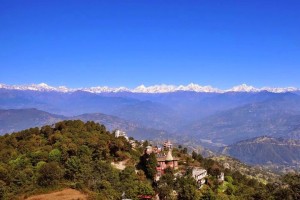
As trekkers ascend through the lower foothills, they traverse through charming villages inhabited by ethnic communities such as the Gurungs, Magars, and Thakalis. Here, ancient traditions and customs still thrive, offering a captivating insight into the rich cultural heritage of the region. Along the trail, colorful prayer flags flutter in the breeze, while ornately carved chortens and monasteries serve as reminders of the spiritual significance of the mountains to the local inhabitants.
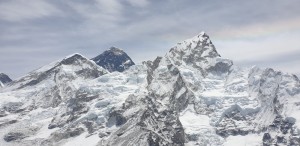
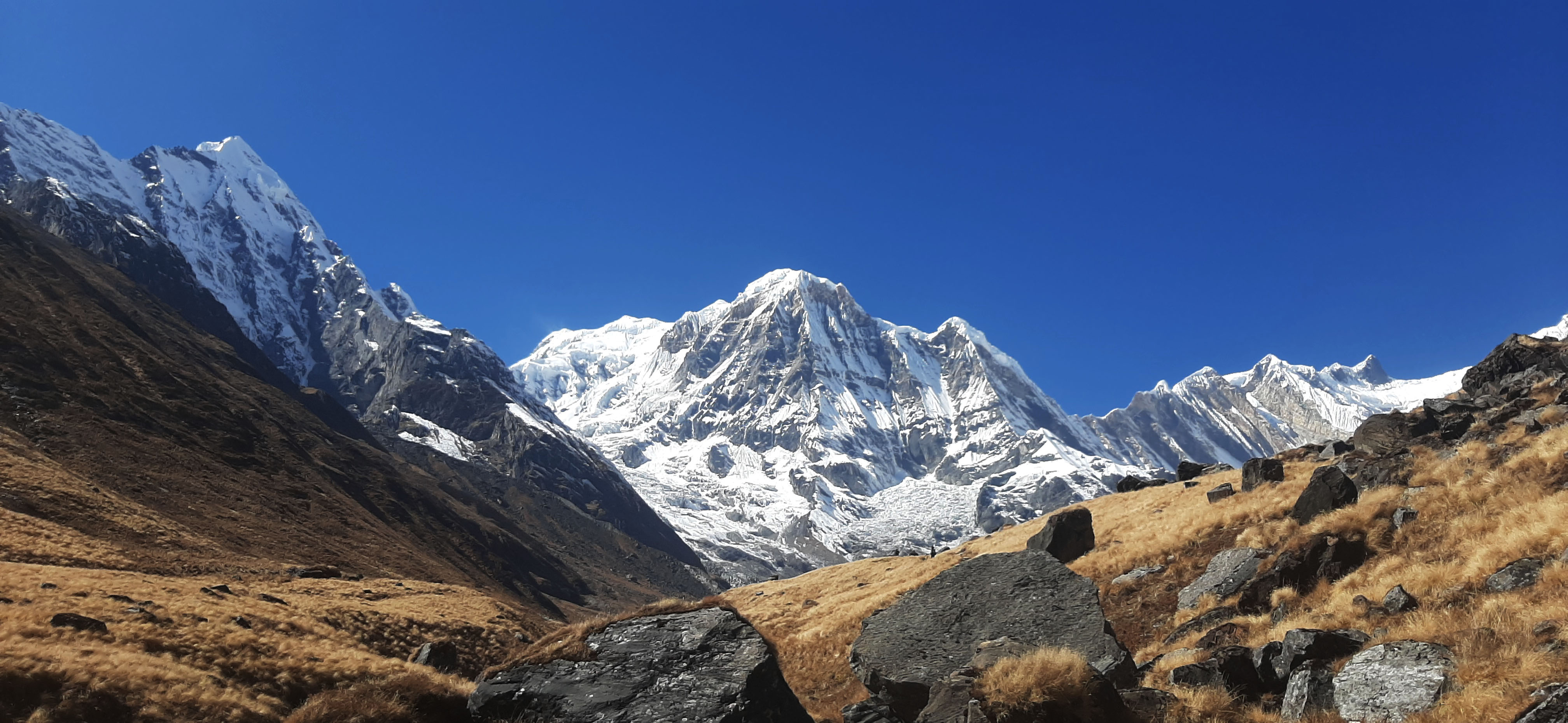
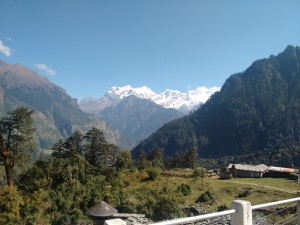
The highlight of the trek is undoubtedly the Annapurna Sanctuary, a natural amphitheater surrounded by towering peaks, including the majestic Annapurna I. As trekkers make their way to Annapurna Base Camp, they are enveloped by a sense of tranquility and awe-inspiring beauty. The sight of the sun rising over the snow-capped mountains and illuminating the surrounding landscape is a moment that will be etched in the memory forever.
After reaching the pinnacle of the trek at Annapurna Base Camp, trekkers descend back to Pokhara, completing an unforgettable journey filled with adventure, camaraderie, and personal triumph. Whether it's the breathtaking scenery, the cultural encounters, or the sense of accomplishment, the Annapurna Base Camp Trek offers an experience that transcends mere exploration - it's a journey of the soul, leaving an indelible mark on all who undertake it.
If you have less time and are looking for a shorter trek in the Annapurna region, the Mardi Himal Trek offers a different experience with peaceful forest trails, mountain ridges and close Himalayan views.
Day 1: Pokhara to Landruk
Begin your adventure with a scenic drive from Pokhara to Nayapul, the starting point of the trek. From Nayapul, embark on a trek through picturesque landscapes featuring terraced fields and traditional villages. Trek along the Modi Khola valley, eventually reaching the charming village of Landruk, known for its beautiful views of the Annapurna range and warm Gurung hospitality. Spend the night in a cozy tea house, enjoying the serene mountain atmosphere.
Day 2: Landruk to Chhomrong
After breakfast, leave Landruk and descend to the Modi Khola river. Cross a suspension bridge and begin a gradual ascent through lush forests and farmland, passing through villages like New Bridge and Jhinu Danda. Continue climbing until you reach Chhomrong, a picturesque village perched on a hillside with stunning views of Machapuchare (Fishtail) and Annapurna South. Settle into your tea house for the night and enjoy the tranquil surroundings.
Day 3: Chhomrong to Himalaya or Deurali
Depart from Chhomrong, descending to the Chhomrong Khola before ascending steeply to Sinuwa. The trail continues through dense bamboo and rhododendron forests, passing through the villages of Bamboo and Dovan. Depending on your pace and preferences, you can stop for the night either in Himalaya or continue further to Deurali. Both locations offer basic yet comfortable accommodations, providing a restful stop amidst the peaceful mountain wilderness.
Day 4: Deurali to Machapuchare Base Camp
From Deurali, continue your ascent towards Machapuchare Base Camp (MBC). The trail leads you through rugged, increasingly alpine terrain, with breathtaking views of the surrounding peaks becoming more prominent. Upon reaching MBC, you'll be surrounded by towering, snow-capped mountains, including the iconic Machapuchare. Spend the night in a tea house at MBC, acclimatizing and soaking in the majestic scenery.
Day 5: Machapuchare Base Camp to Annapurna Base Camp
Trek from Machapuchare Base Camp to Annapurna Base Camp (ABC), a relatively short but incredibly rewarding journey. As you climb higher, the landscape opens up, revealing the full grandeur of the Annapurna Sanctuary. Arrive at ABC, where you are greeted by a 360-degree panorama of some of the highest peaks in the world, including Annapurna I, Annapurna South, Hiunchuli, and Machapuchare. Spend the afternoon exploring, taking photographs, and enjoying the breathtaking environment before spending the night at the base camp.
Day 6: Annapurna Base Camp to Bamboo
Wake up early to witness a stunning sunrise over the Annapurna massif. After breakfast, begin your descent, retracing your steps through Machapuchare Base Camp, Deurali, and Dovan. Continue downhill until you reach Bamboo, where you can rest and reflect on the incredible journey you have undertaken. The descent offers a different perspective on the familiar trails and allows you to appreciate the diverse flora and fauna once more.
Day 7: Bamboo to Jhinu Danda
Leave Bamboo and head towards Jhinu Danda on your final trekking day. The trail takes you back through lush forests and terraced fields, with a mix of ascents and descents. Upon reaching Jhinu Danda, take advantage of the natural hot springs located a short hike down from the village. Relax and soothe your tired muscles in the warm waters, a perfect way to conclude your trekking adventure. Spend the night in Jhinu Danda, enjoying the peaceful surroundings and reflecting on your journey.
Day 8: Jhinu Danda to Pokhara
On the final day, trek from Jhinu Danda to Nayapul, where your vehicle will be waiting to drive you back to Pokhara. The journey provides one last opportunity to take in the beautiful landscapes and say goodbye to the mountains. Once in Pokhara, relax and celebrate the successful completion of your trek. Spend the evening exploring the lakeside area or simply unwinding at your hotel, enjoying the comforts of city life after days in the mountains.
*****
During the Annapurna Base Camp (ABC) trek, accommodation is primarily provided by tea houses, which are small lodges offering basic but comfortable facilities.
Food on the ABC trek is provided by the tea houses and consists of a variety of dishes that cater to both local and international tastes.
Hiring a guide and porter enhances the trekking experience by providing support, safety, and enriching insights into the local culture and environment.
---
Yes, travel insurance is highly recommended. Ensure it covers high-altitude trekking, medical emergencies, and evacuation.
In case of a medical emergency, contact your guide or a local teahouse owner for assistance. It's crucial to have travel insurance that covers high-altitude trekking and emergency evacuations.
Follow the principles of Leave No Trace: dispose of waste properly, minimize campfire impact, respect wildlife, and be considerate of other trekkers. Use refillable water bottles and water purification methods to reduce plastic waste.
Wi-Fi is available at some tea houses, usually for a fee or payable. However, the connection can be slow and unreliable. Mobile network coverage is available in some areas; consider purchasing a local SIM card for better connectivity.
Altitude sickness can be a concern as the trek reaches heights of over 4,000 meters. It's important to acclimatize properly, stay hydrated, and ascend slowly. Diamox can be used as a preventive measure, but consult with a doctor before using it.
Hiring a guide can enhance your experience with local knowledge and language skills. A porter can help carry your load, making the trek less physically demanding. Both can be hired in Kathmandu or Pokhara.
While some people trek alone, it’s recommended to trek with a guide or in a group for safety, especially in case of emergencies. Solo trekkers should be well-prepared and experienced.
Essential items include sturdy trekking boots, warm clothing (layers), a down jacket, a rain jacket, a sleeping bag, trekking poles, a backpack, water purification tablets, and a first-aid kit. Don’t forget your permits and travel documents.
Yes, trekking gear can be rented or purchased in Kathmandu and Pokhara, including sleeping bags, down jackets, and trekking poles.
Yes, it is advisable to prepare physically. Cardiovascular exercises like running, cycling, and hiking with a loaded backpack can help improve your endurance and stamina.
The trek typically takes 7 to 12 days, depending on the starting point, itinerary, pace, and acclimatization needs.
The Annapurna Base Camp Trek is a popular trekking route in Nepal that takes you to the base camp of Annapurna, one of the highest peaks in the world. The trek offers stunning views of the Annapurna and Dhaulagiri mountain ranges, diverse landscapes, and a rich cultural experience.
The trek is considered moderate in difficulty. It involves long walking days, steep ascents and descents, and high altitudes, but it is achievable for those with a reasonable level of fitness and some trekking experience.
The best times are during the pre-monsoon (spring) season from March to May and the post-monsoon (autumn) season from September to November. These periods offer stable weather and clear mountain views.
| No of person | Price |
|---|---|
| 2-3 person | $580 |
| 4-6 person | $550 |
| 7-10 person | $535 |
| 11 - 15 person | $520 |



-thumb.jpg)