


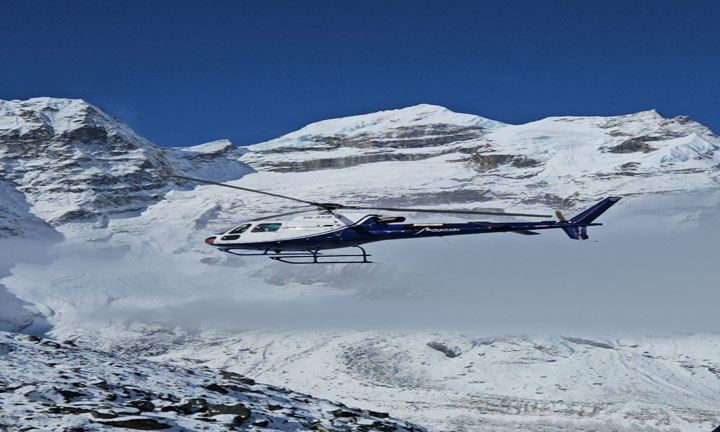
Everest Helicopter Tour: Flying Over the Roof of the World from Kathmandu
2026-08-30 09:35 AMImagine sitting inside a small helicopter, the engine humming steadily beneath you, as the flat streets of Kathmandu slowly disappear and the world below turns into a sea of green hills, brown ridges, and eventually, white snow. Then, out of nowhere, there it is Mount Everest, standing tall and quiet against a bright blue sky.
That moment is hard to explain into words.
The Everest helicopter tour from Kathmandu is one of those experiences that people describe as "life-changing” and honestly, for once, that phrase doesn't feel like an exaggeration. Whether you're a seasoned trekker or someone who simply wants to see the world's highest mountain without spending weeks on the trail, this helicopter tour gives you a front-row seat to something truly remarkable.
In this blog, I’ll take you through everything you need to know about the Everest Helicopter Tour Package what’s included, what the journey feels like, how much it costs, and what you can expect along the way. More importantly, I’ll share my personal thoughts on why this unforgettable flight to the heart of the Himalayas can be more than just a tour—it can be a once-in-a-lifetime experience worth every rupee.
What Is the Everest Helicopter Tour?
The Everest helicopter tour is a scenic flight package that takes you from Kathmandu directly to the Everest region — flying over mountain ranges, deep valleys, and Sherpa villages — before landing near Everest Base Camp at an altitude of around 5,364 meters (17,598 feet).
This tour is designed for people who:
- Want to see Mount Everest up close without trekking for 12 to 14 days
- Have limited time but still want a genuine Himalayan experience
- Are physically unable to do the full Everest Base Camp trek
- Simply want a once-in-a-lifetime aerial view of the highest peaks on Earth
The tour typically lasts between 4 to 5 hours in total, including the flight time, a stop at a high-altitude hotel or viewpoint for tea or breakfast, and the return journey back to Kathmandu.
"You don't need to be a mountaineer to feel the presence of Everest. Sometimes, all you need is a clear morning and a seat by the helicopter window."
The Helicopter Tour Package: What's Included?
Most standard Everest helicopter tour packages include a fairly solid set of services. Here's what you can generally expect:
Departure from Kathmandu
The tour starts early and I mean early. Most departures happen around 6:00 AM to 7:00 AM from Tribhuvan International Airport in Kathmandu, or sometimes from a smaller helipad depending on the operator.
The early start is intentional. Morning hours offer the clearest skies and the calmest weather conditions in the Himalayas. By afternoon, clouds tend to roll in, and visibility drops. So yes, set that alarm.
The Scenic Flight Over the Himalayas
Once airborne, the helicopter heads northeast, crossing over the hilly terrain of the Kathmandu Valley and then climbing higher as the landscape changes dramatically below you.
You'll fly over:
- The Solu-Khumbu region — home to the Sherpa people
- The Sagarmatha National Park, a UNESCO World Heritage Site
- Namche Bazaar, the famous trading hub and gateway to Everest
- The Khumbu Glacier, one of the largest glaciers in Nepal
- Stunning peaks like Lhotse, Nuptse, Ama Dablam, and Cho Oyu
The mountain views from inside the helicopter are nothing short of spectacular. If you're sitting on the right side of the aircraft, you'll get a particularly good look at Everest as you approach the region.
Landing at Kala Patthar or Everest Base Camp Helipad
Depending on your package, the helicopter will either:
- Land at the Everest Base Camp helipad (near Gorak Shep at around 5,364 m), or
- Land at Kala Patthar viewpoint (around 5,545 m), which actually offers a better direct view of Everest's summit
Both are incredible. However, Kala Patthar is considered by many trekkers and guides to offer the finest panoramic view of Everest and the surrounding peaks.
At this point, you step out of the helicopter, breathe in the thin mountain air, and just... take it all in. The silence up there is something else. It's a bit overwhelming if I'm being honest — standing in a place where some of the world's greatest mountaineers have stood, with the summit of Everest almost close enough to feel real.
Tea or Breakfast at a High-Altitude Lodge
Most packages include a stop at a local teahouse or lodge — usually at Syangboche (around 3,780 m) or Lukla — where you can have a warm cup of tea or a simple Nepali breakfast before heading back to Kathmandu.
This is a nice touch. It gives you a moment to sit down, chat with fellow passengers, and let the experience sink in before the return flight.
Return Flight to Kathmandu
After the stop, the helicopter heads back to Kathmandu. Many passengers say the return flight feels different — quieter, more reflective. You've seen something big, and part of you is still trying to process it.
You're usually back in Kathmandu by late morning, which leaves the rest of the day free for exploring the city, resting, or sharing photos with everyone back home.
How Much Does the Everest Helicopter Tour Cost?
Pricing varies depending on the operator, the type of helicopter, and whether you book a shared or private tour.
Shared Helicopter Tour
- Cost: Approximately USD 1,400 to USD 2800 per person
- Group size: Typically 4 to 5 passengers sharing one helicopter
- Best for: Solo travelers or couples looking to manage costs
Private Helicopter Tour
- Cost: Approximately USD 4,500 to USD 5,600 for the entire helicopter
- Capacity: Usually 4 to 5 passengers total
- Best for: Families, groups of friends, or anyone who wants a more personal experience
Keep in mind: Prices can change based on fuel costs, government permits, and seasonal demand. Always confirm the final price with your tour operator before booking.
Most packages include:
- Government landing fees and permits
- Fuel surcharges
- Light refreshments or breakfast
- A certificate of completion (some operators offer this as a nice memento)
- Airport taxes and handling fees
What's usually NOT included:
- Personal travel insurance
- Tips for the pilot or staff
- Any extra gear or personal expenses
Best Time to Do the Everest Helicopter Tour
Timing matters a lot when it comes to helicopter tours in the Himalayas. The weather in this region can change quickly, and cloud cover can ruin the entire experience.
Spring (March to May)
This is generally considered the best time for the tour. The skies are clear, temperatures are relatively mild, and the mountains look stunning. It's also trekking season, so you'll see a lot of activity in the region.
Autumn (September to November)
The second-best season. Post-monsoon skies are crystal clear, and the air is fresh. October is particularly popular and is often called the "golden month" for Himalayan tourism.
Winter (December to February)
Possible, but cold and sometimes unpredictable. Some tour operators still run flights during this period, and on a clear winter morning, the views can actually be exceptional. Just be prepared for very cold temperatures at altitude.
Monsoon (June to August)
Not recommended. Heavy rainfall, thick cloud cover, and turbulent air make helicopter tours risky and often impossible. Most operators suspend or severely limit flights during this period.
What to Expect on the Day of the Tour
Here's a simple breakdown of what a typical tour day looks like:
Before the Flight
- Wake up early (around 4:30 AM to 5:00 AM)
- Have a light breakfast at your hotel
- Head to the airport or helipad by 6:00 AM
- Check in, receive a briefing from your tour operator
- Board the helicopter
During the Flight
- Keep your camera or phone ready — there will be constant photo opportunities
- Stay calm if you feel slight turbulence — it's normal and usually brief
- Ask your pilot or guide about the peaks you're flying over — most are happy to point things out
- Breathe slowly and steadily once you land at high altitude — altitude sickness can affect even short visits
After the Tour
- Return to Kathmandu by mid-morning
- Rest and hydrate
- Consider visiting Thamel or Boudhanath Stupa if you have energy for some sightseeing
Tips for First-Time Passengers
If this will be your first time on a helicopter, or your first time at high altitude, here are a few practical things to keep in mind:
- Dress in warm layers. Even in spring or autumn, it's extremely cold at Everest Base Camp. Wear a jacket, bring gloves, and wear good shoes.
- Don't eat a heavy meal before the flight. Some people feel motion sick in small helicopters, especially over mountain terrain.
- Carry your camera fully charged. You'll regret having a dead battery at 5,000 meters.
- Stay hydrated. High altitude dehydration is real. Drink water before and after the flight.
- Go slow at altitude. When you land at the base camp area, don't rush around. Move slowly, breathe deeply, and sit down if you feel dizzy.
- Book through a reputable operator. Safety is everything. Choose a tour company with good reviews, certified pilots, and proper equipment.
- Check the weather forecast the evening before. Sometimes tours are postponed due to weather. Be flexible with your schedule.
Is the Everest Helicopter Tour Worth It?
This is the question everyone asks, and honestly, the answer depends on what you're looking for.
If you're someone who has always dreamed of seeing Everest but doesn't have the time, fitness, or desire to do the 14-day trek, then yes — this tour is absolutely worth it. You'll see the same mountains, breathe the same thin air, and stand in the same place that thousands of trekkers work weeks to reach.
If you've already done the Everest Base Camp trek, the helicopter tour gives you a completely different perspective — an aerial one — which many trekkers say is equally moving.
Personally, if I were choosing between the two and had only a few days in Nepal, I would pick this helicopter tour without much hesitation. The trek is incredible, no doubt. But not everyone has 14 days. Not everyone's knees agree with 14 days of mountain trails. And not everyone should have to miss out on Everest just because of that.
The helicopter makes it accessible. And there's nothing wrong with that.
How to Book the Everest Helicopter Tour
Booking is fairly straightforward. Here are your main options:
Book Through a Local Tour Operator in Kathmandu
This is often the most affordable option. You can call walk into Merriment Travels in Nayabazar near Thamel, the main tourist hub of Kathmandu, and book directly. Prices here tend to be a bit more negotiable.
Book Online Before You Arrive
The established tour company in Nepal have websites where you can book and pay in advance. This is a good idea during peak seasons (spring and autumn) when spots fill up quickly.
Book Through YourPhone Call
If you're staying at a mid-range , you can call or do the Whatsapp on +977 9841720005
Always ask for a written confirmation of your booking, including what's included, departure time, and cancellation policy before making any payment.
A Few Final Thoughts
The Everest helicopter tour is one of those rare experiences where the reality actually lives up to the expectation. In a world where so many things are over hyped, standing at nearly 5,400 meters with Everest right in front of you the wind cold and sharp on your face, the silence broken only by distant prayer flags snapping in the breeze is something that quietly stays with you long after you've returned home.
You don't need to be an adventurer. You don't need special training. You just need a clear morning, a good tour operator, and a willingness to sit back and let the Himalayas do what they do best — make you feel very small and very grateful at the same time.
If Nepal is on your list, make this tour part of the plan. You won't look back.