


Chitwan National Park Tour Package: The Complete Guide for 2026
2026-08-31 18:42 PMChitwan National Park Tour Package: The Complete Guide for 2026
If you're planning a trip to Nepal and someone has told you not to skip Chitwan, they're right. Most first-time visitors to Nepal picture the Himalayas — Everest base camp, Annapurna base camp, the trekking trails — and forget that the country also has thick lowland jungle, wild rhinos, and one of the best national parks in South Asia sitting quietly in the Terai. A Chitwan National Park tour package is how most travelers experience it, and this guide walks through everything you'd actually want to know before booking one: the park itself, the different package lengths, what a typical day looks like, what it costs, and the questions people usually have before they go.
This isn't a rushed overview. It's meant to answer the things you'd actually search for — how many days you need, what's included in the price, whether it's safe, what the Tharu culture is about, and how to pick between a 1 night, 2 night, or 3 night package. Grab a cup of tea and settle in, because there's a lot to cover.
What Exactly Is Chitwan National Park?
Chitwan National Park sits in the Terai lowlands of south-central Nepal, spread across close to 950 square kilometers of Sal forest, grassland, rivers, and wetland. It covers parts of Chitwan, Nawalpur, Parsa, and Makwanpur districts, and the Narayani and Rapti rivers form a natural boundary along its northern and western edges — the same rivers you'll be canoeing and safari-ing around if you book a package here.
It became Nepal's very first national park back in 1973, at a time when the country was just starting to think seriously about wildlife protection. Before that, this land was mostly hunting ground for Nepal's royal family and their guests, which is a strange fact considering it's now protected precisely because of the animals that once made it a hunting destination. By 1984, UNESCO recognized Chitwan as a World Heritage Site, largely because of its role in protecting the one-horned rhinoceros population and its overall biodiversity.
Today, the park is home to over 700 species of wildlife including the Bengal tiger, one-horned rhino, wild elephants, sloth bears, leopards, gharial crocodiles, and more than 500 species of birds. It's genuinely one of the best places in Asia — not just Nepal — to see a rhino in its natural habitat without needing binoculars from half a kilometer away.
Why People Choose Chitwan Over Other Wildlife Destinations
There's no shortage of wildlife parks around the world, so it's fair to ask why Chitwan specifically draws so many visitors. A few reasons keep coming up when you talk to people who've actually been.
First, the rhino sightings here are unusually reliable compared to most parks elsewhere. Chitwan holds one of the largest populations of one-horned rhinos left in the world, and because the terrain includes open grassland alongside dense forest, spotting them during a jeep safari isn't the long shot it is in many other reserves.
Second, it's not purely a wildlife destination — it's a cultural one too. The Tharu community, the indigenous people of this region, still live in and around the park's buffer zone, and a huge part of what makes a Chitwan trip memorable isn't just the animals, it's the evening cultural shows, the village walks, and the food that comes from this specific part of Nepal.
Third, it's logistically easy to combine with the rest of a Nepal itinerary. Chitwan sits more or less on the route between Kathmandu and Pokhara, so travelers doing the classic Nepal circuit — Kathmandu, Chitwan, Pokhara — don't need to backtrack or take a separate trip. You can fold it in without losing days to travel.
And finally, it's accessible for almost any fitness level. Unlike trekking routes in the Himalayas, a Chitwan package doesn't require training or altitude acclimatization. You could be 8 or 78 and still comfortably do a jeep safari, a canoe ride, and a village walk.
Best Time to Visit Chitwan National Park
Timing matters more in Chitwan than people expect. The Terai climate is very different from the mountains, and it swings hard between seasons.
October to March is widely considered the best window. The weather during these months is dry, cool, and comfortable, especially in the mornings and evenings, which happen to be the best times for wildlife activity anyway. Visibility is at its best because the tall elephant grass that covers much of the park gets cut back or dies down in the dry season, making it easier to actually spot animals instead of just hearing them move through grass taller than a person.
April to June turns hot and humid, with daytime temperatures often climbing past 35°C. Some travelers still visit during this window because animals tend to gather closer to rivers and water holes when it's this warm, which can actually work in your favor for sightings, but the heat itself is tough to deal with for a full day of activities.
July to September is monsoon season, and this is generally the time to avoid unless you have no other option. Trails get muddy, leeches become an issue on walking safaris, and heavy rain can disrupt scheduled activities like canoe rides. Some lodges even close briefly during the peak of monsoon.
If your travel dates are flexible at all, aim for the cooler months. December and January can get a bit chilly in the early morning, so pack a light jacket even though you're heading to a "hot" region of Nepal.
How to Reach Chitwan
Getting to Chitwan is straightforward, and most tour packages handle this part for you, but it helps to know the actual options.
By road from Kathmandu: This is the most common route, and it takes roughly 5 to 6 hours by tourist bus or private vehicle, covering just over 150 kilometers. The road winds through hills before dropping down into the flatter Terai region, and it's a scenic drive if you don't mind the curves.
By road from Pokhara: Slightly shorter, at around 4 to 5 hours, since Pokhara sits a bit closer to the Chitwan side of the country.
By air: If you'd rather skip the road trip entirely, there are short domestic flights to Bharatpur Airport from both Kathmandu and Pokhara, usually taking around 20 minutes in the air. This is a popular choice for travelers with limited time who don't want to spend half a day on a bus.
Most Chitwan packages include pickup and drop as part of the deal, whether that's from the bus park, the airport, or directly from your hotel if you're arriving by private vehicle, so this usually isn't something you need to arrange separately.
Choosing the Right Package Length
This is probably the most common question people have before booking: how many days do you actually need in Chitwan? The honest answer depends on your schedule, your interest level in wildlife, and how much of the cultural side you want to see.
1 Night 2 Days
1 night 2 days chitwan tour package is the shortest realistic option and works well if you're squeezed for time but still want to experience the core of Chitwan. Typically, you arrive on Day 1 and spend the afternoon and evening on the Tharu village visit and the evening cultural program, then wake up early on Day 2 for the jungle safari before heading back out. It's compressed, but it still covers a safari, a cultural show, and a taste of the local community. What you miss out on is a second safari attempt and the extra activities like the Elephant Breeding Center or the canoe ride, which are usually only offered as add-ons on this shorter version.
2 Nights 3 Days
This 2 nights 3 days chitwan package is the sweet spot for most travelers, and it's the most commonly booked package length. It gives you two full activity days, which usually means one jungle safari, a canoe ride, the Elephant Breeding Center visit, a Tharu village walk, and the evening cultural program, all without feeling rushed. If you're combining Chitwan with Kathmandu and Pokhara on a standard two-week Nepal trip, this length fits naturally into that schedule.
3 Nights 4 Days
This is the package for travelers who genuinely want to maximize their wildlife chances and see everything Chitwan has to offer without rushing. With an extra day, you typically get two full jungle safaris instead of one, more time for bird watching, a slower-paced village experience, and often a visit to spots like 20,000 Lake for those specifically interested in birdlife. If tiger or rhino sightings matter a lot to you, the extra safari attempt meaningfully improves your odds, since wildlife sightings are never guaranteed on any single outing.
There isn't a wrong choice here — it really comes down to how much time you have and how deep you want to go. If you're short on days elsewhere in your trip, the 1 night 2 days version still delivers a solid experience. If wildlife photography or birdwatching is a real priority, lean toward the 3 night 4 days Chitwan National Park Tour option.
What a Typical Day Looks Like
Regardless of which package length you choose, most itineraries are built around the same core set of activities, just with more or fewer repetitions depending on how many days you have.
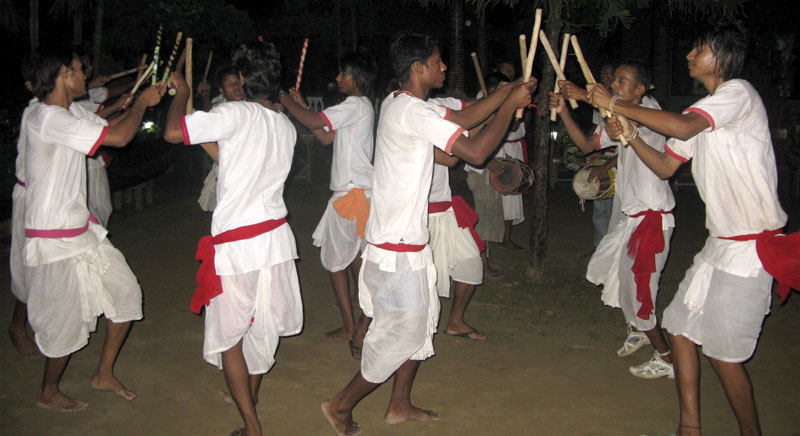
Your trip usually starts with a pickup from wherever you're coming from — the bus park, the airport, or simply a welcome at your hotel if you arrived by private vehicle. From there, the first activity is often the Tharu village visit, where a local guide walks you through the community's homes, their farming lifestyle, and the small cultural details that have stayed mostly unchanged for generations. This is followed, usually in the evening, by the Tharu cultural program — a performance built around the stick dance along with folk songs and music, which gives you a real sense of the region's identity before you even step into the jungle.
The jungle safari itself, whether by jeep or on foot, happens early in the morning when animals are most active, and this is genuinely the centerpiece activity of any Chitwan package. Guides know the park's trails and animal patterns well, and they'll take you through areas where rhino, deer, and bird sightings are common, with tiger sightings being rarer but not impossible.
If your package includes extra days, you'll likely also get a canoe ride along the Rapti River, which is a quieter, more relaxed activity where you're floating past crocodiles sunning themselves on the banks and a wide variety of water birds overhead. Many packages also include a stop at the Elephant Breeding Center, known locally as Khorsor, where you can watch mother elephants and their calves being cared for by their mahouts.
Meals throughout your stay are almost always included and typically feature a mix of Nepali, Indian, and continental options, with vegetarian choices always available. Depending on your resort, you might also get to try a few Tharu dishes, which are worth asking about since they're not always on the standard menu.
The Tharu People — More Than a Side Activity
It's worth spending a bit more time on the Tharu community, because a lot of first-time visitors treat the village visit as a minor add-on when it's actually one of the more meaningful parts of a Chitwan trip.
The Tharu are considered the original inhabitants of this part of the Terai, having lived here long before Chitwan became a protected national park. What's genuinely interesting is that generations of exposure to this malaria-heavy, forested region left them with a natural resistance to the disease, which is part of why they were able to settle and thrive here when outsiders historically couldn't.
Their villages still stand around the park's buffer zone today, with mud-and-thatch houses, distinctive hand-painted wall patterns, and a farming-based lifestyle that hasn't shifted dramatically over the decades. Walking through one of these villages with a local guide gives you a look at daily routines, traditional houses, and small customs that most tourists never get exposed to elsewhere in Nepal.
The evening cultural show — built around the stick dance — is a direct extension of this same culture, not a performance put on purely for visitors. The rhythms, the movements, and even some of the food served at your resort during your stay trace back to Tharu tradition. If you get the chance to ask questions during the village walk, most guides are happy to talk about their own family history and how the community has adapted to living so close to a protected wildlife area.
Elephant Breeding Center: What It Actually Is
The Elephant Breeding Center, locally called Khorsor, comes up in almost every Chitwan itinerary, but a lot of visitors aren't totally clear on what it is or why it exists.
It was established by the Nepali government in 1985, originally with elephants brought in from India, Thailand, and Myanmar. The center's original purpose had nothing to do with tourism — it was built to raise elephants for forest patrol duty and conservation work inside the park, since domesticated elephants play a real role in monitoring and protecting the wider Chitwan ecosystem.
Over time, it's become one of the few places in Nepal where visitors can watch elephant calves and their mothers up close, observing feeding and bathing routines carried out by their mahouts. It's usually one of the more relaxed stops on a Chitwan itinerary since you're not out in open jungle terrain, making it a good fit for families or anyone who wants a slower-paced activity between the more active parts of the trip.
One thing worth knowing if you've read older travel blogs: elephant-back safaris, where tourists used to ride elephants directly into the jungle, have largely been phased out across the park due to growing concerns about the animals' welfare. Elephants inside Chitwan today are mainly kept for patrol duty and breeding programs rather than carrying visitors around, so the breeding center visit is really where the elephant experience happens now — watching rather than riding.
Wildlife You Might Actually See
People often ask what they'll realistically spot during a Chitwan trip, since wildlife sightings can vary a lot by season and luck.
The one-horned rhinoceros is the animal most associated with Chitwan, and thankfully, it's also one of the more commonly sighted large mammals here, given the park's healthy population. Spotting one grazing in open grassland or wading through a river is genuinely one of the highlights most visitors walk away talking about.
Wild elephants roam parts of the park as well, though sightings are less predictable than rhinos since they tend to stay deeper in forested areas.
The Bengal tiger is present in Chitwan, and while sightings do happen, they're rare and never guaranteed. Tigers are naturally elusive animals, and a good guide will maximize your chances by reading recent tracks and signs, but nobody can promise you'll see one — treat any sighting as a bonus rather than an expectation.
Gharial and marsh mugger crocodiles are almost always visible during the canoe ride along the Rapti River, often sunning themselves along the banks in plain sight.
Beyond the headline animals, Chitwan is home to spotted deer, sloth bears, langur monkeys, wild boar, and an enormous range of birdlife — over 500 recorded species, making it a serious destination for birdwatchers specifically. Depending on the season, you might spot kingfishers, hornbills, storks, and various raptors during your safari or canoe ride.
One thing worth mentioning: many resorts sit close enough to the park's buffer zone or the riverbank that you don't always need to be out on a formal activity to see wildlife. Deer, langur monkeys, and various birds are fairly commonly spotted right from a resort garden or room balcony, especially early morning or around dusk.
What's Typically Included and Excluded in a Chitwan Package
Costs and inclusions can shift depending on the operator, the season, and the hotel category you choose, but here's the general pattern most Chitwan packages follow, regardless of whether you're booking a 1 night, 2 night, or 3 night version.
Usually included:
- Pickup and drop from the bus park, airport, or hotel, depending on how you're arriving
- Accommodation for the length of your package on a twin-sharing basis
- All meals — breakfast, lunch, and dinner
- The jungle safari, whether jeep or walking, with a trained guide
- The Tharu village visit and evening cultural program
- National park entry permits and safari guide fees
- On longer packages: the Elephant Breeding Center visit and a canoe ride on the Rapti River
Usually excluded:
- Flight tickets if you're flying into Bharatpur instead of driving
- Nepal visa fees
- Personal expenses like laundry, phone calls, or bottled water
- Tips for guides and drivers
- Travel insurance
- Any activity outside the core itinerary — a helicopter tour, extended bird watching trips, or add-on activities not built into your specific package length
It's genuinely worth asking your tour operator for a clear, written breakdown before paying anything, since some cheaper packages quietly leave out activities like the safari or the canoe ride to keep the advertised price lower. A package that looks like a great deal on paper sometimes turns out to be missing the parts you actually wanted.
What to Pack for Chitwan
Packing right makes a noticeable difference to how comfortable your trip feels, especially if you're doing a walking safari or spending a lot of time outdoors.
Stick to light, breathable clothing in neutral or earthy colors — avoid bright white or red, since these tend to stand out and can spook wildlife during a safari. A light jacket is worth packing even in the dry season, since mornings and evenings can get cool, particularly between December and February. Comfortable, closed walking shoes matter more than people expect, especially for walking safaris where you're on uneven jungle trails.
Beyond clothing, bring insect repellent and sunscreen, a hat, sunglasses, and if you have them, binoculars for spotting birds and distant wildlife. A basic set of personal medicines is always a good idea, and if you're prone to motion sickness, something for that too, since jeep safaris can get a little bumpy on rougher trails.
Is Chitwan Safe?
This comes up a lot, especially from solo travelers and families with young kids, so it's worth addressing directly.
Jungle safaris in Chitwan are safe when carried out with a licensed guide through a registered operator. Guides are trained to read animal behavior, keep safe distances, and know which trails to avoid depending on recent animal movement inside the park. Walking safaris follow the same principle — as long as you're with an experienced guide and you follow their instructions, the activity is considered low-risk.
For solo female travelers, Chitwan is generally considered safe, particularly when staying at registered hotels and sticking to organized activities. As with travel anywhere, it's sensible to avoid wandering into isolated areas alone after dark and to stick with guided programs while inside the park itself.
Families with children also do well here. Activities like the Elephant Breeding Center, canoe rides, and the cultural show are enjoyable and low-intensity for kids, and jeep safaris tend to be more comfortable than walking safaris for younger travelers or elderly family members who might struggle with longer treks.
Accommodation Options in Chitwan
Where you stay shapes the overall feel of your trip more than people expect. Chitwan has a wide spread of accommodation, from simple guesthouses to higher-end jungle safari resorts.
Budget lodges tend to be basic but comfortable, usually located a short distance from the park entrance, and are a solid choice if your priority is keeping costs down without giving up the core activities. Mid-range resorts typically offer more comfortable rooms, better food variety, and sometimes a pool, while still being reasonably priced. Higher-end jungle lodges, some of which sit directly along the buffer zone or riverbank, offer a more immersive experience — this is where you're more likely to spot wildlife directly from the property itself, along with better service and more polished cultural programs.
Whichever category you go with, it's worth checking reviews specifically around meal quality and how close the property actually is to the park entrance, since "near Chitwan" can sometimes mean a longer transfer than expected.
The Landscape and Ecosystem Inside the Park
It helps to understand what you're actually walking or driving through once you're inside Chitwan, since the park isn't just one type of terrain. Most of it is covered in Sal forest, a hardwood tree species that dominates the Terai region and gives the park its dense, shaded feel in certain stretches. Mixed in with the Sal forest are large patches of tall elephant grassland, some of it growing several meters high during peak season, which is exactly the kind of cover rhinos and tigers use to stay hidden. Riverine forest lines the banks of the Rapti and Narayani rivers, and this is often where you'll find the highest concentration of birdlife, since the mix of water, shade, and open sky attracts species that wouldn't necessarily be found deeper in the Sal forest.
The park also includes oxbow lakes, marshland, and seasonal wetlands, which matter a lot more than they might sound. These wetland pockets are where crocodiles bask, where deer and rhinos come to drink, and where a huge share of the park's bird species congregate, particularly during the dry season when smaller water sources elsewhere have dried up. This is part of why the dry winter months are so much better for sightings — animals are forced to concentrate around fewer water points, which naturally increases your odds of spotting them during a safari.
A Short History of How Chitwan Became a Protected Park
It's worth knowing a little of the backstory here, because it explains a lot about how the park operates today. Before it became a protected area, this region was largely used as a hunting ground, particularly by Nepal's royal family and visiting foreign dignitaries during the mid-20th century. Tiger and rhino hunts were fairly common events, and the population of both species dropped sharply as a result.
By the 1960s, conservationists and parts of the government recognized that the rhino population specifically was heading toward serious trouble, and pressure grew to protect the remaining habitat rather than continue treating it as hunting territory. This led to the creation of Chitwan National Park in 1973, making it the first protected area of its kind in Nepal. The shift wasn't just symbolic — active anti-poaching patrols, buffer zone management, and community involvement programs were introduced over the following decades, and they're a big part of why the park's rhino population has recovered as well as it has compared to many other regions in Asia.
The 1984 UNESCO World Heritage listing further cemented the park's importance internationally, and today Chitwan is often cited as one of the conservation success stories in South Asia, particularly for how it's managed to grow its rhino numbers back up through sustained protection efforts and cooperation with the surrounding buffer zone communities, including the Tharu.
The Buffer Zone and Community-Based Tourism
One detail that doesn't come up enough in typical Chitwan write-ups is the buffer zone system, which is actually a big part of why local communities benefit directly from tourism here rather than being pushed out by it. The buffer zone is a ring of community-managed land surrounding the core protected area, and a share of park revenue is legally required to go back into these buffer zone communities for development projects, schools, and conservation education.
This is part of why so much of the tourism infrastructure — the resorts, the guides, the cultural programs — is either run by or closely tied to local Tharu families rather than outside operators. When you book a Chitwan package and take part in the village visit or the cultural show, a meaningful portion of that experience is directly supporting the same community that's lived alongside this land for generations. It's one of the reasons Chitwan tourism has generally been viewed as a more sustainable model compared to some other wildlife destinations in the region, where local communities see little direct benefit from visitor numbers.
Jeep Safari vs Walking Safari — Which Should You Choose?
Most packages give you a choice, or sometimes a combination, of jeep and walking safaris, and it's worth understanding the difference before you book.
A jeep safari covers more ground in less time, which naturally increases your odds of spotting larger animals like rhinos and, occasionally, elephants, since you can move quickly between different zones of the park. It's also the more comfortable option for families with young children, elderly travelers, or anyone who'd rather not walk for a few hours in warm weather. The trade-off is that you're viewing everything from inside a vehicle, which some travelers find less immersive.
A walking safari puts you directly on the ground with an armed guide, moving quietly through the forest on foot. This is a completely different experience — you notice smaller details, tracks, birdlife, and plant life that you'd miss entirely from a jeep, and there's a different kind of focus that comes from actually being on foot in wild terrain. It requires reasonable fitness and a level of comfort with walking for a few hours, and it's generally considered safe with an experienced guide, though it does carry slightly more inherent unpredictability than a vehicle-based safari simply because you're closer to the ground and moving slower.
Many travelers end up doing one of each if their package length allows for it — a jeep safari for coverage and rhino sightings, and a walking safari for a slower, more detailed look at the forest itself.
Canoe Ride on the Rapti River — What to Expect
The canoe ride is one of the quieter, more scenic parts of a Chitwan trip, and it's worth knowing what it actually involves so you're not expecting something more intense than it is. You'll typically board a traditional dugout canoe, carved from a single tree trunk, guided by a local boatman who navigates the Rapti River using a long pole rather than a motor. This keeps the ride slow and quiet, which is exactly why it tends to be a good time for spotting crocodiles resting along the banks and a wide range of water birds overhead.
The ride usually lasts somewhere between 30 minutes to an hour, depending on the water level and the specific route your resort uses. It's a low-effort, relaxing activity compared to the safari, and it's suitable for almost anyone, including younger children, as long as basic safety instructions are followed. Life jackets are typically provided, and it's worth wearing one even if the water looks calm, since river conditions can shift depending on the season.
Booking Tips Before You Confirm a Package
A few practical things are worth checking before you hand over any payment for a Chitwan package, regardless of which operator you're going with.
Ask exactly which activities are confirmed versus which are "subject to availability," since some operators list activities like the canoe ride or the Elephant Breeding Center visit as part of the itinerary but quietly make them optional add-ons depending on the season or water levels. Confirm whether your safari will be jeep, walking, or both, since this affects both the experience and sometimes the price. Check what type of accommodation is included — resort category can vary a lot even within the same price range, so it's worth asking for photos or reviews of the specific property rather than assuming "resort" means the same thing across operators.
It's also worth checking group size for shared activities like jeep safaris, since a packed vehicle with eight or ten people gives you a very different experience compared to a smaller group of four. Finally, always get a written confirmation of what's included and excluded in the price, ideally over email or a booking platform rather than a verbal agreement, so there's no confusion once you arrive.
How many days do I really need in Chitwan? Two nights, three days is the most balanced option for most travelers, giving you a proper safari, a canoe ride, and the cultural side without rushing. If you're tight on time, a 1 night 2 days trip still covers the essentials. If wildlife sightings matter most to you, go for 3 nights 4 days for the extra safari attempt.
Will I definitely see a rhino or tiger? Rhino sightings are fairly common given Chitwan's healthy population. Tigers are far rarer and never guaranteed, since they're genuinely wild animals rather than something staged for visitors. A skilled guide improves your odds but can't promise a sighting.
What's the best month to visit? October through March offers the most comfortable weather and the best visibility for spotting animals, since the tall grass dies back during the dry season.
Do I need any special permits? Yes, but this is almost always handled by your tour operator and included in the package price, so you don't need to arrange it separately.
Can I combine Chitwan with Pokhara and Kathmandu easily? Yes — Chitwan sits roughly on the route between the two, which is exactly why most travelers slot it into the middle of their Nepal itinerary rather than treating it as a separate side trip.
Is elephant riding still available? Not really, or at least not in the way older travel blogs describe. Most elephants inside the park today are used for patrol and breeding work rather than tourist rides, largely due to welfare concerns. The Elephant Breeding Center is where you'll get an up-close elephant experience now.
What should I wear on safari? Neutral or earthy-colored clothing, closed walking shoes, and a hat. Avoid bright colors, especially white and red.
Final Thoughts
A Chitwan National Park tour package is one of those trips that sounds simple on paper — a few days, a safari, some village walks — but ends up being one of the more memorable parts of a Nepal trip for a lot of travelers. Whether you go for the compressed 1 night 2 days version or take your time with a 3 night 4 days package, you're getting a genuine mix of wildlife, culture, and a slower pace than most Himalayan legs of a Nepal trip.
If you're still deciding on the length, think honestly about your schedule and what matters most to you. If it's ticking Chitwan off your list without giving up too much time elsewhere, the shorter package works fine. If wildlife photography, bird watching, or a deeper cultural experience is the goal, giving yourself the extra day or two is worth it. Either way, the mix of rhinos, river life, and Tharu culture found here is genuinely hard to find anywhere else in Nepal.