


Annapurna Base Camp Trek from Pokhara Route and Practical Guide
2026-10-06 20:49 PMAnnapurna Base Camp Trek from Pokhara: Route and Practical Guide
Pokhara is one of the easiest places to begin the Annapurna Base Camp Trek. The city is already close to the trekking area, so there is no need to spend extra days travelling deep into the region before starting the walk.
For many travellers, the trek begins with a short drive from Pokhara toward the trailhead. From there, the route gradually moves through villages, forests and mountain landscapes before reaching Annapurna Base Camp at 4,130 metres.
If you are staying in Pokhara and planning to trek to Annapurna Base Camp, this guide explains how the journey works, where the trek starts, what transport is normally used and what you should prepare before leaving Pokhara.
Why Start the Annapurna Base Camp Trek from Pokhara?
Pokhara is the natural base for many Annapurna treks.
The city has good hotels, restaurants, trekking shops, transport services and access to the surrounding mountain trails. This makes it convenient to spend a night in Pokhara before starting the trek.
Another advantage is that the distance between Pokhara and the trekking area is relatively short compared with travelling from Kathmandu.
You can arrive in Pokhara, prepare your trekking equipment, meet your guide and porter, and then leave for the trailhead according to your trekking plan.
For travellers who are already in Pokhara, this can make the overall trip simpler and more flexible.
Where Does the Annapurna Base Camp Trek Start from Pokhara?
The exact starting point depends on the itinerary and road conditions.
A common approach is to drive from Pokhara toward the area around Kande, then begin walking through the hills. Other itineraries use different road access points depending on the route selected.
The important thing to understand is that you do not start walking from the centre of Pokhara. A short vehicle journey is normally required before reaching the trekking trail.
Your guide or local trekking company can arrange the transport according to the current road conditions and the itinerary.
How Do You Travel from Pokhara to the Trailhead?
Private vehicles and local transportation can both be used.
For a private trekking group, a vehicle can pick you up from your hotel in Pokhara and take you toward the starting point. This is convenient because you can leave at a suitable time and avoid waiting for other passengers.
Shared transportation can be another option for travellers who want to keep the cost lower.
Road conditions can change during the year, particularly after heavy rain. Because of this, the exact driving time should not be treated as fixed.
A local trekking operator can confirm the practical transport arrangement before your trek starts.
Annapurna Base Camp Trek Route from Pokhara
After leaving Pokhara by road, the trekking route passes through the lower hills before entering the Annapurna region.
Depending on the itinerary, you may walk through places such as Kande, Australian Camp, Pothana, Jhinu Danda, Chhomrong, Himalaya, Deurali and Machhapuchhre Base Camp before reaching Annapurna Base Camp.
The landscape changes as you gain altitude.
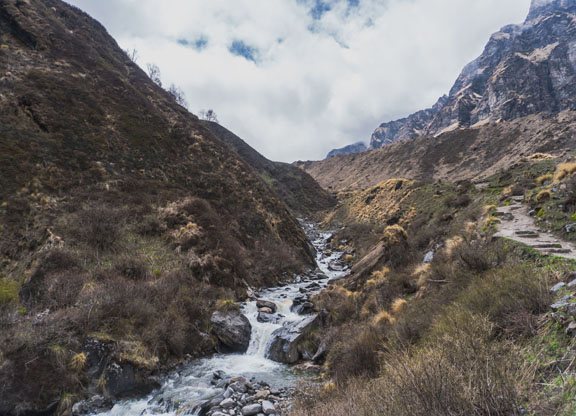
The lower sections have green hills, villages and terraced farmland. Higher on the trail, the valley becomes narrower and the surrounding mountains become much more prominent.
The final section toward Annapurna Base Camp is very different from the lower trail. The landscape becomes more open and the high mountain walls surround the sanctuary.
Pokhara to Annapurna Base Camp Trek in 8 Days
An 8-day itinerary is a practical option for travellers who have limited time.
The exact overnight stops can vary depending on the trekking company, trail conditions and the group's walking pace.
A typical plan allows enough time to reach the sanctuary, spend time around Annapurna Base Camp and return toward the lower villages before travelling back to Pokhara.
The advantage of using a fixed 8-day itinerary is that transport, accommodation and walking days can be organised in advance.
However, trekking time should always remain flexible enough to deal with weather, health or unexpected trail conditions.
For the complete day-by-day trekking itinerary and package arrangements, see our Annapurna Base Camp Trek 8 Days.
How Long Does It Take from Pokhara to Annapurna Base Camp?
The total trekking duration depends on the route and itinerary.
An 8-day package is one option, but some trekkers choose longer itineraries to walk shorter distances each day or include additional places.
The road journey from Pokhara to the trailhead is separate from the trekking days.
This is important when planning flights or buses. Do not assume that finishing the trek means you are immediately back in central Pokhara. You still need to travel by road from the trail area to the city.
If you have a fixed flight from Pokhara or Kathmandu, keeping some extra time in your schedule is sensible.
Best Time for Annapurna Base Camp Trek from Pokhara
The main trekking seasons are generally spring and autumn.
March, April and May offer spring conditions, while September, October and November are popular autumn trekking months.
The monsoon months can bring rain, wet trails, clouds and slippery sections. Winter can provide cold and snow at higher elevations.
That does not mean trekking is impossible outside the main seasons. The right timing depends on weather, trail conditions and your tolerance for cold or rain.
For travellers who want better chances of clear mountain views, the main autumn and spring seasons are usually preferred.
What Can You See on the Way?
The Annapurna Base Camp route is not only about reaching the final destination.
The journey passes through traditional villages, forests and narrow mountain valleys. Rhododendron forests are particularly attractive during spring when the flowers are in bloom.
As you climb higher, the views become more dramatic.
Machhapuchhre is one of the most recognisable mountains along the route. Higher sections also provide views of Annapurna South and other peaks surrounding the sanctuary.
The landscape around Machhapuchhre Base Camp and Annapurna Base Camp is particularly impressive because of the steep mountain walls surrounding the valley.
Accommodation on the Annapurna Base Camp Trek
Accommodation is mainly in local teahouses and lodges.
Rooms are generally simple, with basic beds and blankets. At higher elevations, facilities can be more limited than in Pokhara.
Most trekkers eat their evening meal and breakfast at the lodge where they stay. The menu can include traditional Nepali food as well as common trekking meals.
During busy trekking periods, popular villages can become crowded. Travelling with a guide or booking accommodation in advance can make the process easier for groups with fixed schedules.
Food and Water
Dal bhat is one of the most common meals on the Annapurna trail and is a practical choice for trekkers because it provides carbohydrates and protein.
Other food options are normally available at the teahouses, although choices become more limited as you climb higher.
You should drink enough water throughout the day.
Bottled water, filtered water and treated water are commonly available depending on the location. A reusable bottle and a suitable water purification method are useful for longer trekking days.
Is Annapurna Base Camp Trek Difficult from Pokhara?
The trek is generally considered moderate, but it should not be underestimated.
The main challenge is not technical climbing. It is the combination of several hours of walking, repeated uphill and downhill sections and increasing altitude.
The final approach to Annapurna Base Camp is at high altitude, so walking slowly becomes more important.
People who regularly walk or exercise usually find the trek more manageable. If you are not used to long walks, start preparing several weeks before the trip.
You do not need to be an athlete. Consistent walking and basic cardiovascular fitness can make a noticeable difference.
What Should You Pack from Pokhara?
One advantage of starting in Pokhara is that you can check your equipment before leaving the city.
For the trek, you should normally carry:
- Comfortable trekking shoes
- Trekking trousers
- T-shirts
- Warm fleece
- Down or insulated jacket
- Waterproof jacket
- Warm hat and gloves
- Trekking socks
- Sunglasses
- Sunscreen
- Reusable water bottle
- Headlamp
- Personal medication
- Small first-aid items
- Sleeping bag
- Backpack or daypack
Avoid carrying unnecessary items. A lighter backpack makes long uphill days easier.
If you are travelling with a porter, your main luggage can be carried while you keep the items needed during the day in a smaller backpack.
Do You Need a Guide from Pokhara?
A local guide can make the trek easier to manage, especially for first-time trekkers.
A guide can help with the route, accommodation, walking pace, weather decisions and communication with local lodges.
A porter can also be arranged if you prefer to walk with a lighter daypack.
For experienced trekkers, the level of assistance can be adjusted according to the group and trekking plan.
The important thing is to choose an arrangement that matches your experience and the type of trip you want.
Can You Arrange the Trek Directly from Pokhara?
Yes.
Travellers staying in Pokhara can arrange transportation, guides, porters and accommodation through local trekking companies.
This can be convenient if you are already in Nepal and do not want to organise everything before arriving.
However, if you are travelling during a busy season or have limited time, arranging the main services before arriving in Pokhara is safer.
It also gives you a clearer idea of the total cost and daily schedule.
What About Altitude?
Annapurna Base Camp is at approximately 4,130 metres, so altitude should be taken seriously.
You may feel completely comfortable at lower elevations and notice a difference as you climb higher.
The best approach is to maintain a steady pace, drink enough water, eat properly and listen to your body.
If you develop significant symptoms such as severe headache, unusual weakness, vomiting or difficulty breathing, inform your guide immediately and do not continue higher without proper assessment.
Your trekking itinerary should allow enough time for your body to adjust as you gain altitude.
Returning to Pokhara
After completing the trek, you descend toward the lower villages and eventually connect with the road.
The final transport back to Pokhara depends on the route and road conditions.
After several days of trekking, returning to a hotel in Pokhara can be a welcome change. Many trekkers use the extra time to rest, enjoy the lakeside area or continue travelling elsewhere in Nepal.
If you have an early flight from Pokhara, it is better to plan the final trekking and driving day carefully rather than leaving everything to the last moment.
Why Choose a Local Trekking Company in Pokhara?
A local company can provide practical support before and during the trek.
This includes arranging transportation, guide and porter services, accommodation and permits according to the agreed package.
Local knowledge is also useful when road conditions, weather or trail conditions change.
For international travellers, having one local contact in Nepal can make communication easier if plans need to be adjusted.
Plan Your Annapurna Base Camp Trek from Pokhara
Starting the Annapurna Base Camp Trek from Pokhara keeps the logistics relatively simple. You can prepare in the city, arrange your transport and begin walking toward the Annapurna Sanctuary without spending unnecessary time travelling elsewhere first.
The trek itself offers a gradual change from green hills and villages to forests, high mountain valleys and the spectacular surroundings of Annapurna Base Camp.
If you already know your travel dates, arranging the guide, transport and accommodation in advance can make the trip smoother, particularly during the busy trekking seasons.
For the complete itinerary, inclusions and current package information, visit our Annapurna Base Camp Trek 8 Days page.