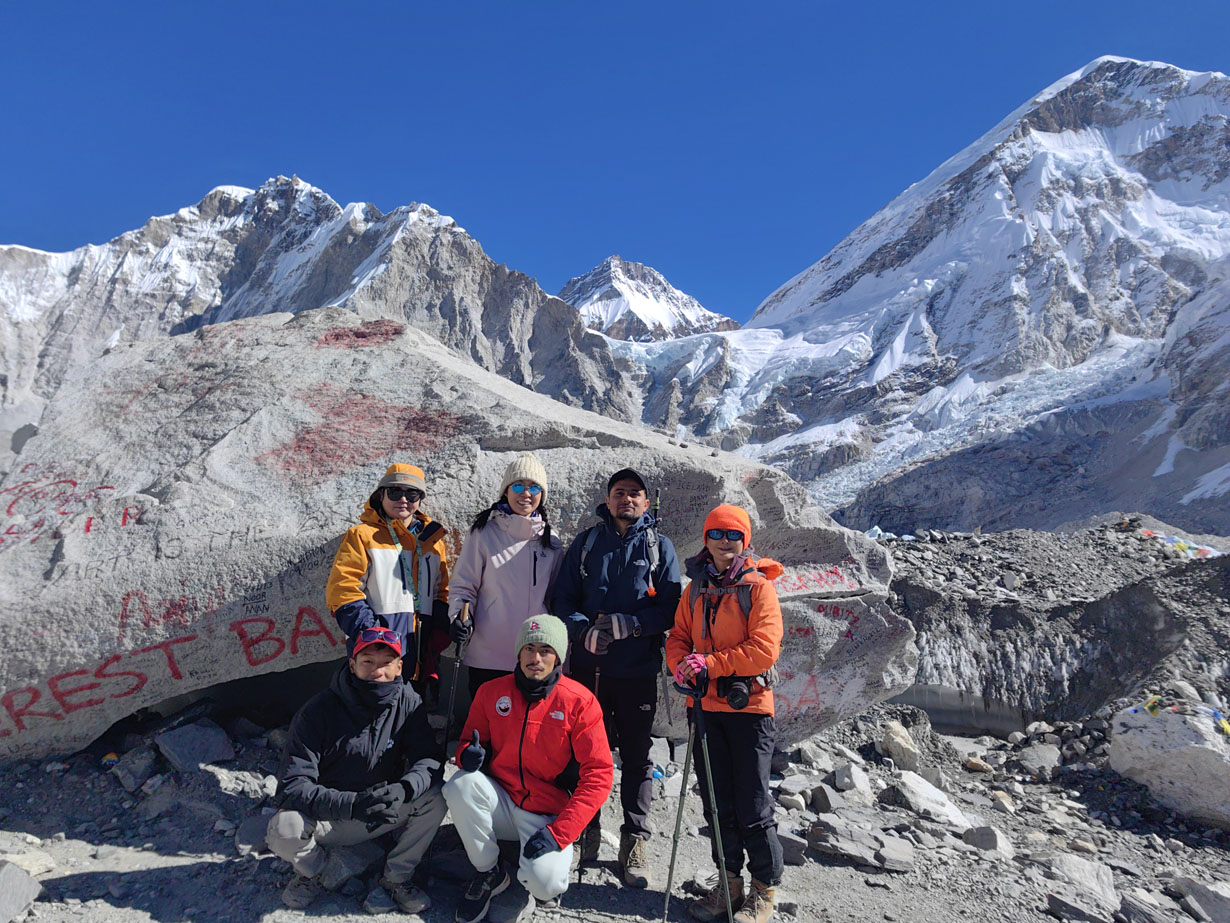

Mount Everest, known as "Sagarmatha" in Nepal and "Chomolungma" in Tibet, stands at 8,848.86 meters (29,031 feet), making it the highest mountain in the world and a symbol of adventure and ambition.
Early Exploration: Western interest in Everest began in the early 20th century with British expeditions. In 1924, George Mallory and Andrew Irvine's disappearance during their ascent created a lasting mystery.
First Ascent: On May 29, 1953, Sir Edmund Hillary and Tenzing Norgay made history by becoming the first climbers to reach Everest's summit, marking a monumental achievement in mountaineering.
Development of Trekking: Trekking gained popularity in the 1960s, spearheaded by pioneers like Colonel Jimmy Roberts. The first commercial trek in 1965 opened the Himalayas to adventurous travelers.
Popularity of Everest: The 1970s and 1980s saw increased trekking activity due to improved infrastructure and the establishment of Sagarmatha National Park in 1976, preserving the region's natural beauty and cultural heritage.
Modern Trekking: Today, the Everest Base Camp trek attracts tourists worldwide, offering breathtaking Himalayan scenery and unique Sherpa culture. Modern trekking is well-organized, with guided tours ensuring safety and promoting sustainable tourism. Mount Everest remains a beacon for both climbers and trekkers, symbolizing the enduring human spirit of exploration.
The Everest Base Camp Trek is one of the most iconic and sought-after trekking adventures in the world, offering unparalleled views of the Himalayas and an intimate glimpse into the culture and lives of the Sherpa people. This ultimate guide for 2024 provides comprehensive information to help trekkers prepare for an unforgettable journey to the base of the world's highest peak.
The Everest Base Camp trek is a 12 to 14-day journey that starts from the bustling town of Lukla, after a short flight from Kathmandu. From Lukla, the trail winds through the stunning Khumbu region, passing through picturesque Sherpa villages, lush forests, and rugged terrain, all while offering breathtaking views of some of the highest peaks in the world.
The Everest Base Camp Trek is a world-renowned adventure that takes you into the heart of the Himalayas. The trek follows the Dudh Koshi River, passing through charming villages, dramatic landscapes, and Sagarmatha National Park, a UNESCO World Heritage Site.
Your adventure begins in Lukla, a thrilling landing spot known as the "Gateway to Everest." From there, you'll make your way to Namche Bazaar, a bustling village nestled amongst the mountains. Namche Bazaar serves as an important stop for acclimatization, giving your body time to adjust to the higher altitude. Here, you can explore the shops selling Sherpa handicrafts and soak in the unique culture of the Khumbu Valley.
The trail continues towards Tengboche Monastery, a spiritual and cultural landmark perched on a hilltop. Tengboche offers spectacular mountain views that will leave you speechless. As you progress on the trek, you'll be surrounded by the awe-inspiring beauty of Sagarmatha National Park, home to Mount Everest and other majestic peaks. The park boasts incredible biodiversity and stunning natural beauty, with opportunities to see rare plants and animals along the way.
The culmination of your trek is reaching Everest Base Camp itself. Standing at the foot of the world's highest mountain is a truly humbling and unforgettable experience. The Everest Base Camp Trek is a challenging but rewarding adventure that will leave you with lasting memories of the Himalayas.
Day 1: Flight to Lukla then trek to Phakding
Begin your adventure with an early morning flight from Kathmandu to Lukla (2,800m), a thrilling experience with stunning views of the Himalayas. Upon arrival in Lukla, you’ll start your trek, heading to Phakding (2,652m). This initial trek is relatively easy and takes about 3-4 hours, descending gradually. You'll walk through picturesque Sherpa villages, passing by mani stones and small monasteries. The day concludes with an overnight stay at a teahouse in Phakding, providing a chance to rest and acclimate.
Day 2: Trek from Phakding to Namche Bazar
Today’s journey takes you from Phakding to Namche Bazaar (3,440m), the bustling hub of the Khumbu region. The trek lasts about 5-6 hours and involves crossing several suspension bridges over the Dudh Koshi River. As you ascend, you’ll be treated to your first views of Thamserku and the sacred Kusum Kanguru peaks. Upon reaching Namche Bazaar, you’ll find a lively market town filled with shops, cafes, and lodges. Overnight in a tea house here.
Day 3: Acclimatization at Namche bazar
Acclimatization is crucial for your journey, and Namche Bazaar offers perfect opportunities for short hikes. You can trek to the Everest View Hotel for a stunning panorama of Everest and surrounding peaks or visit Khumjung village to explore the local culture. Spend the day exploring and allowing your body to adjust to the altitude. Enjoy another night at the teahouse in Namche.
Day 4: Trek from Namche Bazaar to Tengboche
Leave Namche Bazaar and head towards Tengboche (3,860m), a trek of about 5-6 hours. The trail offers magnificent views of Everest, Nuptse, Lhotse, and Ama Dablam. Upon arrival in Tengboche, you can visit the famous Tengboche Monastery, the largest in the Khumbu region. The serene environment and breathtaking backdrop of the monastery make this a memorable stop. Overnight stay in a tea house in Tengboche.
Day 5: Trek from Tengboche to Dingboche
Today’s trek from Tengboche to Dingboche (4,410m) takes about 5-6 hours. The trail descends through a lush forest, crosses the Imja Khola, and ascends gradually to Pangboche. Continuing, you’ll pass through traditional Sherpa villages with close-up views of Mount Ama Dablam. Dingboche is known for its stone-walled fields and offers a beautiful setting for the night at a tea house.
Day 6: Acclimatization Day in Dingboche
Spend the day acclimatizing in Dingboche. You can hike to Nagarjun Hill (5,100m) for acclimatization and spectacular views of Makalu, Lhotse, and other surrounding peaks. Alternatively, you can explore the village and its surroundings. This rest day helps your body adjust to the higher altitudes, preparing you for the upcoming days. Overnight in a tea house in Dingboche.
Day 7: Trek from Dingboche to Lobuche
The trek from Dingboche to Lobuche (4,910m) takes about 5-6 hours. The trail continues along the lateral moraine of the Khumbu Glacier and passes by the memorials at Thukla Pass, dedicated to climbers who lost their lives on Everest. As you ascend, the terrain becomes more rugged with stunning views of Pumori and Nuptse. Overnight stay in a teahouse in Lobuche.
Day 8: Trek from Lobuche to Gorak Shep and Everest Base Camp, then back to Gorak Shep
A long and rewarding day, starting with a trek from Lobuche to Gorak Shep (5,164m) and continuing to Everest Base Camp (5,364m). The round trip takes about 7-8 hours. The trail follows the Khumbu Glacier, offering awe-inspiring views. Reaching Everest Base Camp, you’ll be at the foot of the world's highest mountain. After spending time at the base camp, you’ll return to Gorak Shep for an overnight stay in a teahouse.
Day 9: Hike to Kala Patthar and Trek to Pheriche
An early morning hike to Kala Patthar (5,545m) provides the best views of Everest’s summit and surrounding peaks during sunrise. After savoring the spectacular scenery, you’ll descend back to Gorak Shep for breakfast and then trek down to Pheriche (4,371m), a journey of about 7-8 hours. Pheriche is a small village with basic accommodations where you’ll spend the night in a teahouse.
Day 10: Trek from Pheriche to Namche Bazaar
Retrace your steps from Pheriche to Namche Bazaar, a trek of about 6-7 hours. The descent offers a different perspective of the beautiful landscape you passed through earlier. Enjoy the familiar sights and sounds as you return to the bustling market town of Namche for an overnight stay in a tea house.
Day 11: Trek from Namche Bazaar to Lukla
Your final trekking day takes you from Namche Bazaar back to Lukla, a 6-7 hour journey. This last day of trekking is filled with mixed emotions as you say goodbye to the high mountains and head back towards civilization. Celebrate the completion of your trek with your fellow trekkers in Lukla. Overnight in a tea house in Lukla.
Day 12: Fly from Lukla to Kathmandu
An early morning flight from Lukla returns you to Kathmandu. This scenic flight offers one last glimpse of the Himalayas. Upon arrival in Kathmandu, you can relax and reflect on your incredible journey. Accommodation in Kathmandu is not included in the trek package, so you’ll need to arrange your stay in the city.
We are pleased to offer a range of additional services to enhance your experience before and after your Everest Base Camp trek. Whether you're looking to explore more of Nepal, experience thrilling adventures, or simply relax and unwind, we have you covered.
Hotel Arrangements: We can arrange comfortable and convenient hotel accommodations in Kathmandu before and after your trek. Choose from a variety of options ranging from budget-friendly to luxury hotels, ensuring you have a pleasant stay in the city.
Sightseeing Tours: Discover the rich cultural heritage of Kathmandu Valley with our guided sightseeing tours. Visit UNESCO World Heritage Sites such as Swayambhunath (Monkey Temple), Pashupatinath Temple, Boudhanath Stupa, and the historic Durbar Squares of Kathmandu, Bhaktapur, and Patan. Our knowledgeable guides will provide you with fascinating insights into Nepal’s history, culture, and traditions.
Mountain Flights: For those who wish to see the majestic Himalayas up close without the trekking, we offer scenic mountain flights. Enjoy a breathtaking aerial view of Everest and other towering peaks, providing a once-in-a-lifetime perspective of the world's highest mountains.
Rafting Adventures: Experience the thrill of white-water rafting on Nepal’s scenic rivers. We can organize rafting trips ranging from single-day adventures to multi-day expeditions, suitable for both beginners and experienced rafters. Feel the rush of navigating through rapids while enjoying the stunning landscapes along the riverbanks.
Customized Packages: We are happy to create customized packages tailored to your interests and schedule. Whether you want to combine trekking with other activities like jungle safaris in Chitwan National Park, paragliding in Pokhara, or cultural tours in Lumbini, we can design an itinerary that suits your preferences.
Booking and Inquiries: To book any of these additional services or to inquire further, please contact us directly. We are committed to making your trip to Nepal as enjoyable and memorable as possible, offering seamless arrangements and exceptional experiences.
------
The Everest Base Camp trek is renowned for its challenging conditions, which include high altitude, unpredictable weather, and rough terrain. Trekkers often face altitude sickness as they ascend to heights of over 5,300 meters (17,500 feet). Symptoms like headaches, nausea, and dizziness can significantly hinder progress and comfort. The rugged trails, often steep and rocky, require a good level of physical fitness and stamina. Additionally, the weather in the Himalayas can be highly variable, with sudden snowstorms and extreme cold, especially at night, posing further risks. The combination of these factors makes the trek both physically and mentally demanding.
Accommodation on the Everest Base Camp trek primarily consists of teahouses, which are basic lodges that provide essential amenities. While these teahouses offer a bed, meals, and sometimes hot showers, the facilities can be quite rudimentary compared to standard hotels. Rooms are typically small and unheated, with shared bathrooms and limited access to electricity. Wi-Fi, if available, is often slow and expensive. Despite these limitations, teahouses are an integral part of the trekking experience, offering trekkers a chance to rest, refuel, and socialize with fellow adventurers. As the trek progresses and the altitude increases, the quality and comfort of accommodations generally decrease, reflecting the remoteness and harshness of the environment.
Reaching the starting point of the Everest Base Camp trek typically involves a flight from Kathmandu to Lukla, a small mountain town with one of the world's most challenging airports. The flight itself is an adventure, offering stunning views of the Himalayas. From Lukla, trekkers embark on an approximately 12-day journey to Everest Base Camp and back, passing through various villages, including Namche Bazaar, Tengboche, Dingboche, and Gorak Shep. Some trekkers opt for guided tours, which can provide logistical support and local knowledge, while others prefer to go independently. Alternative routes include trekking from Jiri or taking a helicopter directly to Lukla or even higher up the trail, although these options are less common and can be more expensive.
The best times to trek to Everest Base Camp are during the pre-monsoon (spring) season from late March to early May and the post-monsoon (autumn) season from late September to early November. These periods offer the most stable weather conditions and the clearest mountain views.
The trek to Everest Base Camp is moderately to highly challenging, requiring good physical fitness and stamina. Trekkers must navigate rugged terrain, steep inclines, and high altitudes, with the risk of altitude sickness being a significant concern.
Yes, trekkers need two permits: the Sagarmatha National Park Entry Permit and the Khumbu Pasang Lhamu Rural Municipality Permit. These can be obtained in Kathmandu or at the park entrance.
The trek typically takes about 10-14 days, including acclimatization days. This duration covers the round trip from Lukla to Everest Base Camp and back.
Accommodation consists mainly of teahouses, which provide basic lodging and meals. Facilities are simple, with shared bathrooms and limited amenities. Quality and comfort decrease as altitude increases.
Both options are available. Independent trekking offers more flexibility, while guided tours provide logistical support, local knowledge, and assistance with acclimatization and navigation.
Essential items include sturdy trekking boots, warm clothing (layering is key), a sleeping bag, trekking poles, a first aid kit, water purification tablets, and high-energy snacks. A detailed packing list should be tailored to the season and individual needs.
To prevent altitude sickness, it's crucial to acclimatize properly by taking rest days, ascending slowly, staying hydrated, and avoiding alcohol. Medications like Diamox can also help, but consult a doctor before use.
Yes, travel insurance is highly recommended. It should cover high-altitude trekking, emergency evacuation, medical expenses, and trip cancellations.
Mobile phone coverage is available in some areas, but it can be unreliable. Many teahouses offer Wi-Fi, but it is often slow and expensive. Satellite phones are an option for more reliable communication.
Costs vary depending on whether you trek independently or with a guide, but budget around $1300 to $2000 USD for permits, accommodation, food, flights, and miscellaneous expenses. Guided tours are generally more expensive but include most of these costs.
Besides standard trekking gear, consider bringing a good-quality sleeping bag, trekking poles, a headlamp, and a duffel bag for porters (if using). Renting or buying gear in Kathmandu is also an option.
It's not safe to drink untreated water from rivers or taps. Use water purification tablets, filters, or buy bottled water along the way, though bottled water can be expensive and adds to plastic waste.
Charging facilities are available at most tea houses, but they often come with a fee and can be unreliable. Bring extra batteries or a portable solar charger as a backup.
| No of person | Price |
|---|---|
| 2+ member | $1200 |
| 4+ Members | $1170 |
| 8+ person | $1130 |
| 12+ members | $1090 |
| Group | contact us |